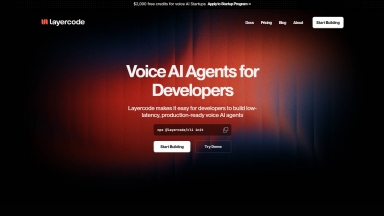
 Layercode
 LazyLLM

Layercode
| Launched | 2008-01 |
| Pricing Model | Freemium |
| Starting Price | $250 / month |
| Tech used | |
| Tag |
LazyLLM
| Launched | |
| Pricing Model | Free |
| Starting Price | |
| Tech used | |
| Tag | Low Code,Mlops |
Layercode Rank/Visit
| Global Rank | 12716969 |
| Country | United States |
| Month Visit | 1082 |
Top 5 Countries
Traffic Sources
LazyLLM Rank/Visit
| Global Rank | |
| Country | |
| Month Visit |
Top 5 Countries
Traffic Sources
Estimated traffic data from Similarweb
What are some alternatives?
Millis AI - Build instant, human-like voice agents with Millis AI. Achieve ultra-low 600ms latency effortlessly using no-code tools & integrate anywhere.
Kodey AI - Kodey AI: Build & deploy autonomous AI agent teams with no-code visual workflows. Accelerate intelligent automation, reduce complexity, and scale enterprise solutions.
Langbase - Langbase empowers any developer to build & deploy advanced serverless AI agents & apps. Access 250+ LLMs and composable AI pipes easily. Simplify AI dev.
TaskingAI - TaskingAI brings Firebase's simplicity to AI-native app development. Start your project by selecting an LLM model, build a responsive assistant supported by stateful APIs, and enhance its capabilities with managed memory, tool integrations, and augmented generation system.