 NanoAPI
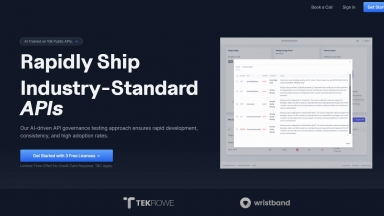
 API Governance Testing
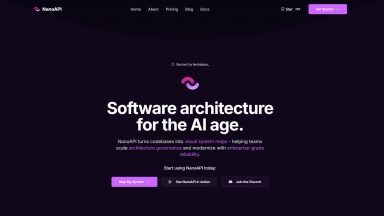
NanoAPI
| Launched | 2022-12 |
| Pricing Model | Freemium |
| Starting Price | €29/ month |
| Tech used | |
| Tag | Architecture Design,Developer Tools,Code Refactoring |
API Governance Testing
| Launched | 2024-3 |
| Pricing Model | Freemium |
| Starting Price | $ 199 /mo |
| Tech used | Google Tag Manager,Gzip,HTTP/3,OpenGraph,HSTS |
| Tag | Code Review,Developer Tools,Software Development |
NanoAPI Rank/Visit
| Global Rank | |
| Country | |
| Month Visit | 267 |
Top 5 Countries
Traffic Sources
API Governance Testing Rank/Visit
| Global Rank | 0 |
| Country | |
| Month Visit | 0 |
Top 5 Countries
Traffic Sources
Estimated traffic data from Similarweb
What are some alternatives?
Macroscope - Macroscope: AI clarity for engineering leaders & developers. Understand your codebase, automate PRs, detect bugs, & get real-time insights to build faster.
Xano - Accelerate development with Xano's no-code backend. Build powerful, scalable apps, integrate AI, & manage data with enterprise-grade security.
Refine - Stop repetitive React internal app setup. RefineAI uses AI to build enterprise apps, admin panels & dashboards fast with full code control.
Refract - Refact.ai: Autonomous AI for your code. Automate end-to-end dev tasks. Self-host for privacy & control. Open-source power.