

Click outside to close
What is Spline AI?
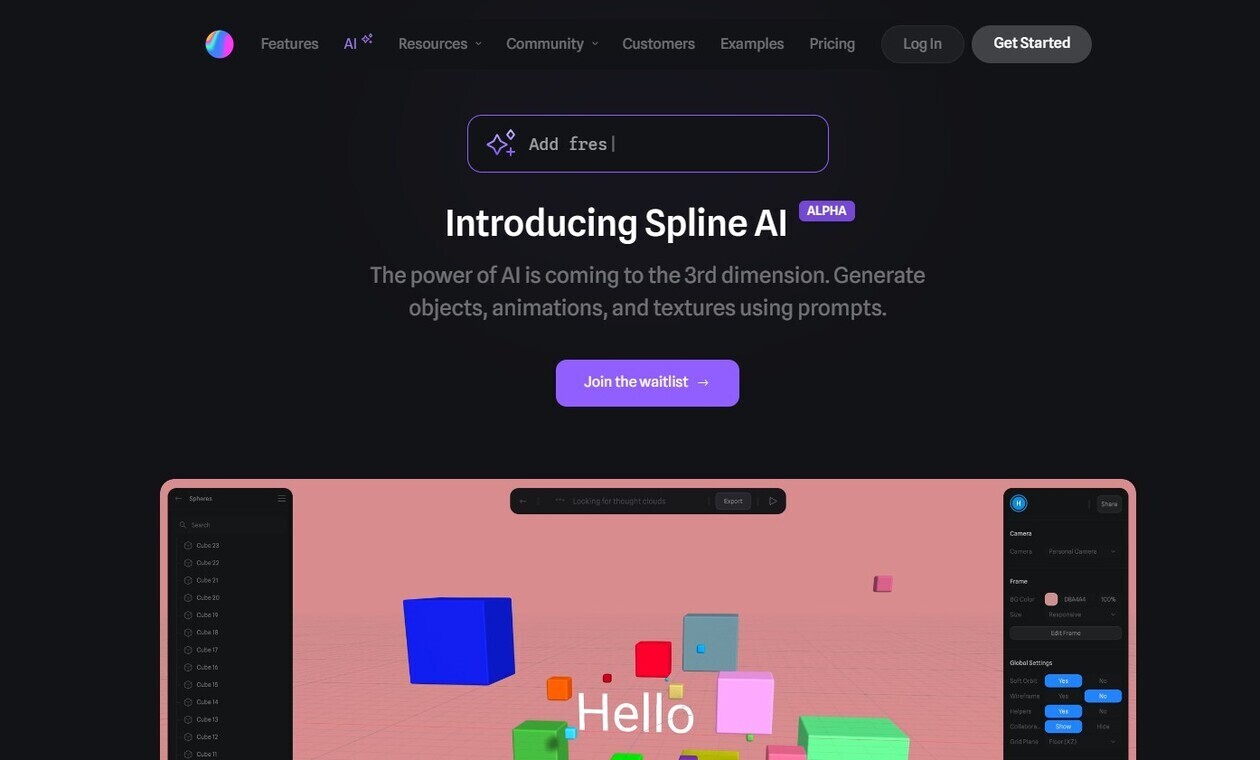
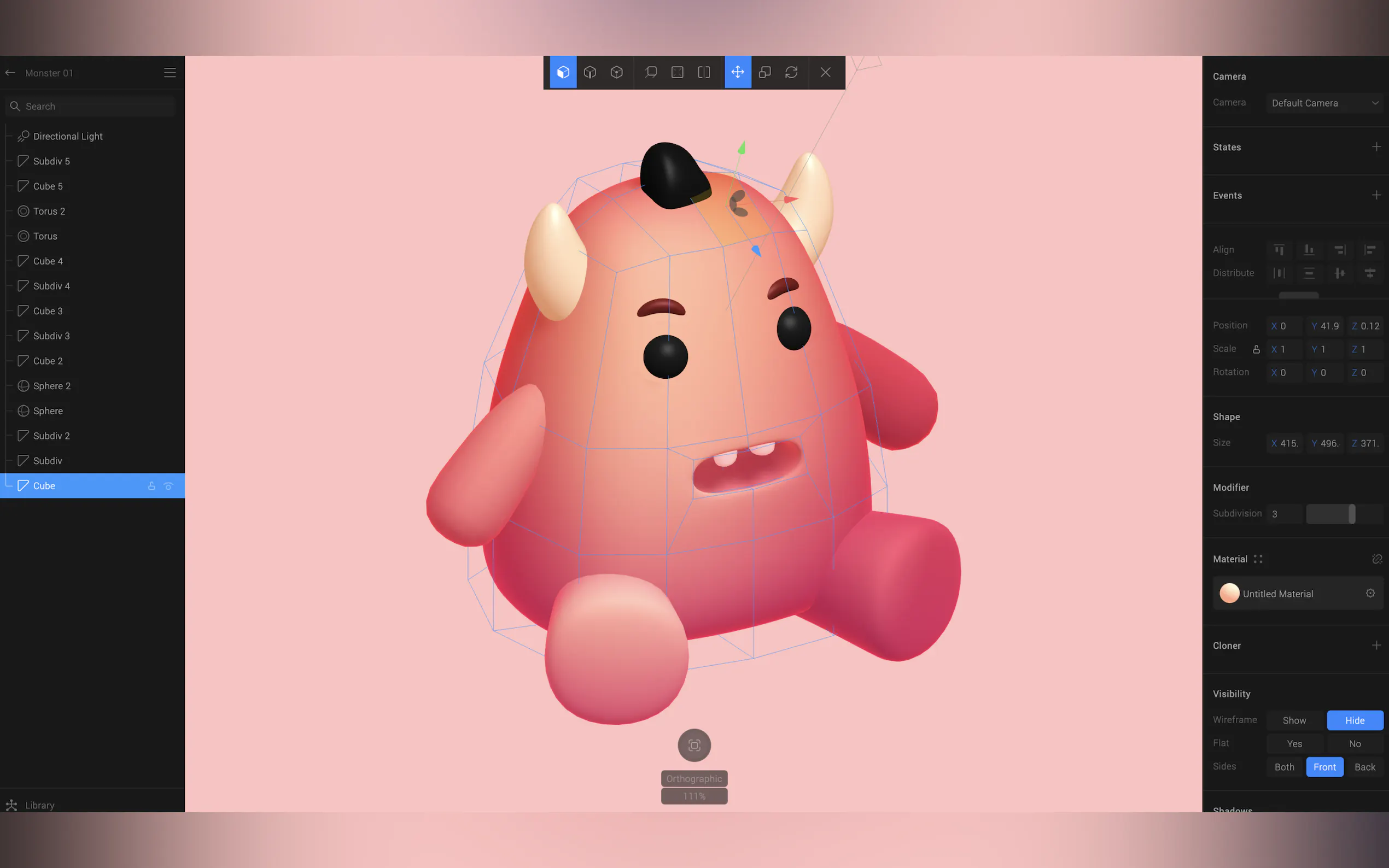
Spline empowers you to create stunning, interactive 3D experiences directly in your browser, without the steep learning curve of traditional software. It's a powerful, accessible platform designed for designers and creative teams to build and collaborate in real-time, transforming ideas into interactive web content with remarkable ease.
Key Features
🤝 Real-time Team Collaboration Work alongside your team in a single, shared 3D space, just like you would in a collaborative document. You can provide feedback with comments, set individual permissions, and brainstorm visually, eliminating the cumbersome process of sending files back and forth.
✨ Interactive Experiences & Physics Breathe life into your designs by adding interactivity without writing a single line of code. Use web browser events like mouse clicks, hovers, and drags to trigger animations. With a built-in physics engine, you can create dynamic simulations, compelling game-like controls, and satisfying object interactions that respond realistically to user input.
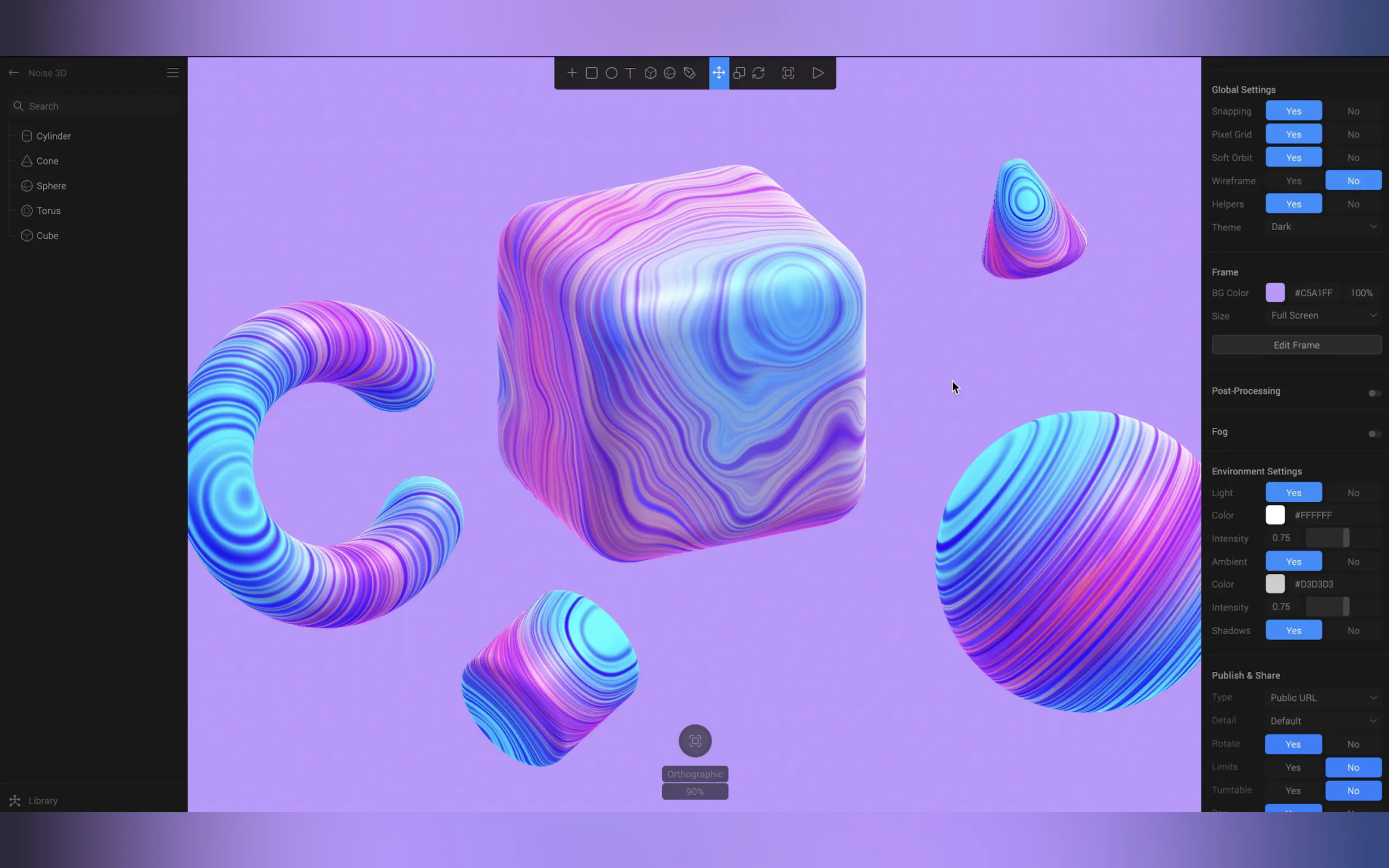
🧊 Versatile 3D Modeling Suite Whether you're crafting precise geometric shapes or fluid organic forms, Spline provides a complete toolkit. You can use parametric objects for quick, editable primitives, dive deep with polygonal modeling and booleans for complex objects, or use 3D sculpting tools to shape your models with artistic freedom.
🌐 Seamless Web Integration & Export Spline is built for the web, from creation to deployment. Instantly embed your interactive 3D scenes into any website or portfolio with a simple copy-paste code snippet. For more advanced integration, you can export clean, ready-to-use code for React, or export your work as images (JPG/PNG), videos (MP4/GIF), or standard 3D formats (GLTF/USDZ).
Use Cases:
Marketing & Product Design: A product team can collaboratively design an interactive 3D mockup of a new phone. They can then embed this interactive model directly onto their landing page, allowing potential customers to rotate, inspect, and engage with the product from every angle.
UI/UX Prototyping: A UX designer can create a high-fidelity, interactive toggle switch or button with realistic physics and 3D depth. This allows them to demonstrate complex micro-interactions and user feedback in a way that static 2D prototypes simply cannot.
Game Prototyping: An indie developer or hobbyist can quickly prototype a game concept. Using the built-in game controls and physics, they can set up a character, build a simple environment, and test movement mechanics in a matter of hours, not days.
Why Choose Spline?
Spline offers a fundamentally different approach to 3D creation that is uniquely suited for today's web.
While traditional 3D tools are siloed on the desktop, Spline operates entirely in your browser. This makes it platform-agnostic and removes the need for powerful, expensive hardware. It brings the accessible, real-time collaboration model of tools like Figma to the world of 3D.
Unlike platforms with notoriously steep learning curves, Spline is built for accessibility. As one product designer noted, it's often the first 3D software that 2D designers feel comfortable with. Its intuitive interface and vector-like editing tools feel familiar, lowering the barrier to entry for millions of creatives.
Where creating physics or game-like controls would typically require complex coding libraries, Spline integrates these as design tools. You can build drag-and-drop interactions, set gravity, and define object collisions visually, empowering you to create richer experiences faster.
Most 3D software exports static assets; Spline exports living, interactive experiences. The ability to generate embeddable iframes or React components means your work is not just a model—it's a ready-to-deploy piece of your web application.
Conclusion:
Spline is more than just a 3D modeling tool; it's a complete, end-to-end solution for creating and deploying interactive 3D content on the web. By combining powerful design features with an intuitive, collaborative, and browser-first foundation, it empowers designers, developers, and creative teams to build the next generation of digital experiences.
Explore the examples and see what you can build with Spline!
More information on Spline AI
Top 5 Countries
13.71%
11.98%
4.2%
3.41%
3.34%
India (13.71%)
United States (11.98%)
France (4.2%)
Germany (3.41%)
Russia (3.34%)
Traffic Sources
45.2%
43.98%
7.71%
mail (0.08%)
direct (45.2%)
search (43.98%)
social (2.47%)
referrals (7.71%)
paidReferrals (0.57%)
Source: Similarweb (Jan 3, 2026)
Spline AI was manually vetted by our editorial team and was first featured on 2023-04-17.
Spline AI Alternatives
Spline AI Alternatives-

Use text to 3D and image to 3D to generate 3D mesh objects. Take your ideas from concepts to real life through remixing and referencing any of your previous results.
-

Xspiral is an online 3D visualization tool integrating 2D/3D hybrid design, real-time collabs, and AI for productivity. With a user-friendly interactive interface and powerful tools, enabling both beginners and professionals to create 3D works effortlessly.
-

DiverseShot AI can transform your videos into 3D Gaussian splatting files easily and is essential for video lovers and professionals.
-

Snaptrude: AI-powered cloud platform for architects. Accelerate concept design, validate programs, & transition to BIM with real-time collaboration.
-

Create custom 3D models from text with the Sloyd.ai. Generate, customize precisely, and get game - ready assets. Ideal for game developers, 3D printing enthusiasts, and designers. Simplify your creative process!