

What is Alumnium?
Tedious, code-heavy test automation can slow down your development and QA cycles. What if you could write test instructions in plain language and let AI handle the complex browser or mobile interactions?
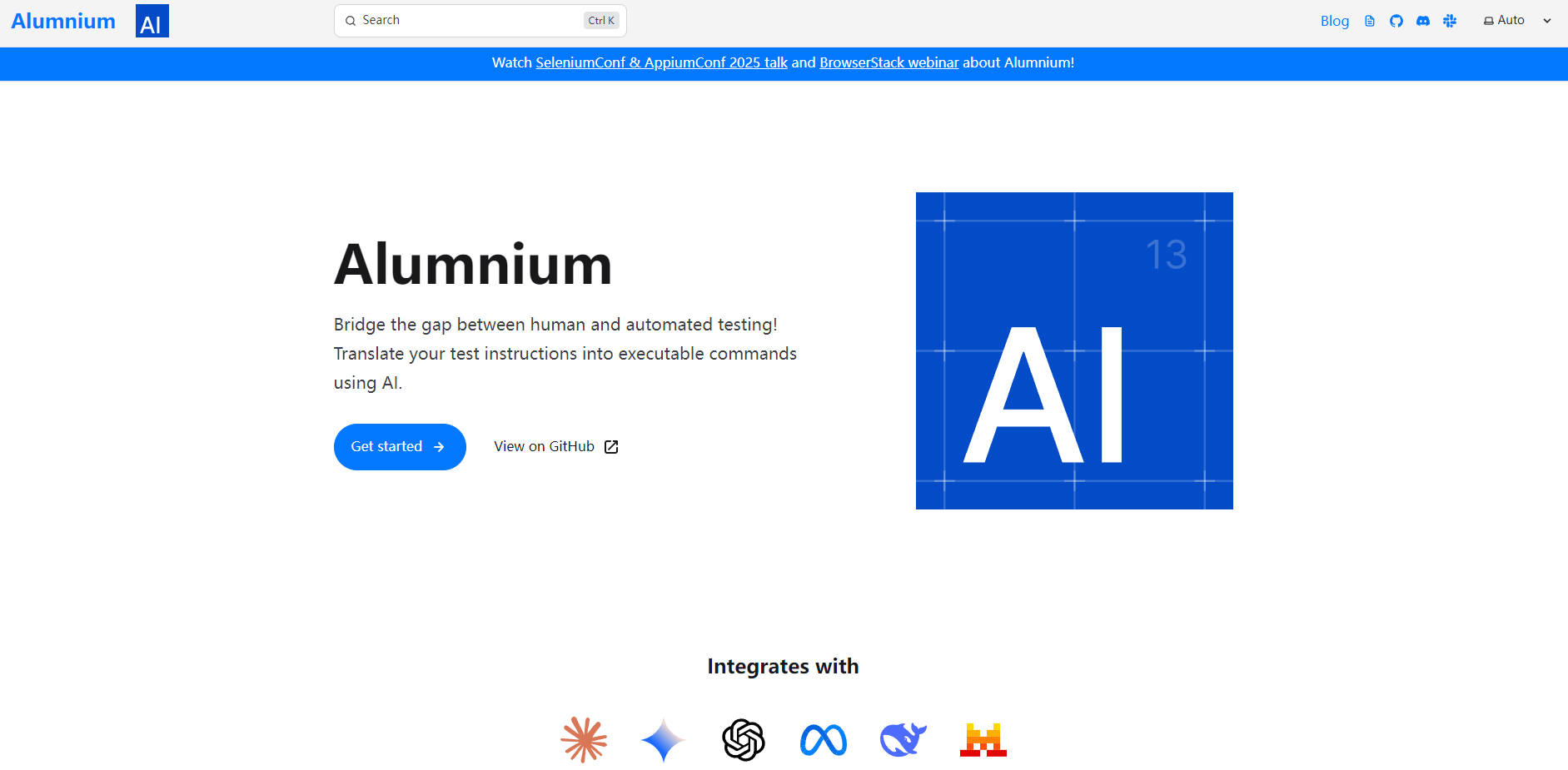
Alumnium empowers software and test engineers to bridge the gap between human test logic and executable automation commands. It’s an open-source tool designed to speed up test creation and maintenance by translating your clear, human-readable instructions into actions performed by popular automation tools like Appium, Playwright, and Selenium.
Key Features & Core Capabilities
Alumnium is built to integrate seamlessly into your existing workflow while introducing the power of AI:
🧠 AI-Powered Instruction Translation: Write your test steps and verifications using simple, plain-language commands like
do(for actions),check(for assertions), andget(for extracting data). Alumnium leverages leading Large Language Models (LLMs) – including Anthropic Claude, Google Gemini, OpenAI, Meta Llama, DeepSeek, and Mistral – to interpret these instructions and determine the necessary browser or mobile interactions.🛠️ Seamless Tool Integration: Alumnium works directly with the test automation tools you already use, specifically Appium, Playwright, and Selenium. This means you can introduce AI capabilities without abandoning your existing infrastructure or requiring a complete overhaul of your test suite.
🐍 Flexible Framework Compatibility: Start integrating AI into your tests today using any Python test framework. Alumnium is designed with future growth in mind, with planned support for additional languages like JavaScript and Ruby, ensuring your automation strategy remains adaptable.
🧑💻 Engineer-Centric Control: Unlike tools that attempt to write tests for you, Alumnium keeps you firmly in control of your test logic. It handles the low-level, often brittle, browser/mobile interactions based on your high-level instructions, allowing you to focus on what to test rather than getting bogged down in how to interact with specific elements.
Practical Applications: Speeding Up Your Tests
See how Alumnium simplifies common testing tasks:
Creating and Verifying Data: Instead of writing detailed locators and interaction code, simply instruct Alumnium:
al.do("create task 'buy milk'")andal.check("task 'buy milk' is pending"). Alumnium interprets these steps, finds the necessary UI elements, and performs the actions via your chosen automation tool, then verifies the state.Extracting and Asserting Information: Easily retrieve information from the page for assertions. Use
al.get("number of pending tasks")to get the count of pending tasks, which you can then assert against expected values (assert al.get("number of pending tasks") == 1). This reduces the code needed to scrape data from the application interface.Navigating and Interacting: Complex sequences like logging in, filling out forms, or navigating multi-step workflows become more intuitive. You write the steps in a descriptive manner, and Alumnium translates them into the precise clicks, typing, and waits required.
Why Choose Alumnium?
Alumnium stands out by building upon the existing, robust test automation ecosystem. It offers a gradual path to incorporating AI into your test suite, allowing you to replace specific parts of your tests with AI-powered instructions while keeping your existing test runners, CI setups, and core test logic intact. Designed by engineers for engineers, it respects your expertise and provides a higher-level abstraction without sacrificing necessary control or flexibility.
Conclusion
Alumnium offers a practical, engineer-friendly approach to leveraging AI in test automation. By enabling you to write tests using natural language instructions and integrating with your existing tools, it helps you create and maintain tests faster and potentially more robustly.
Explore how Alumnium can transform your test automation process.
More information on Alumnium
Launched
2024-10
Pricing Model
Free
Starting Price
Global Rank
10326711
Follow
Month Visit
<5k
Tech used
Simple Analytics,Fastly,Astro,GitHub Pages,Gzip,OpenGraph,Varnish
Top 5 Countries
78.5%
21.5%
United States
Indonesia
Traffic Sources
7.61%
1.06%
0.15%
31.49%
26.2%
32.81%
social
paidReferrals
mail
referrals
search
direct
Source: Similarweb (Sep 25, 2025)
Alumnium was manually vetted by our editorial team and was first featured on 2025-06-01.
Related Searches


