Ollama Docker
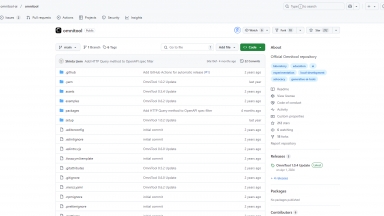
 Omnitool
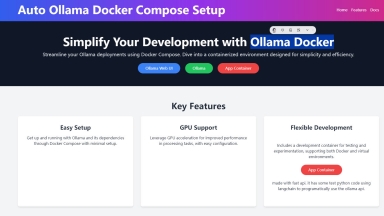
Ollama Docker
| Launched | 2012-01 |
| Pricing Model | Free |
| Starting Price | |
| Tech used | JSDelivr,unpkg |
| Tag | Code Development |
Omnitool
| Launched | |
| Pricing Model | Free |
| Starting Price | |
| Tech used | |
| Tag |
Ollama Docker Rank/Visit
| Global Rank | 0 |
| Country | |
| Month Visit | 0 |
Top 5 Countries
Traffic Sources
Omnitool Rank/Visit
| Global Rank | |
| Country | |
| Month Visit |
Top 5 Countries
Traffic Sources
Estimated traffic data from Similarweb
What are some alternatives?
Ollama - Run large language models locally using Ollama. Enjoy easy installation, model customization, and seamless integration for NLP and chatbot development.
OllaMan - Get a powerful GUI for Ollama. OllaMan simplifies local AI model management, discovery, and chat on your desktop. Easy to use.
Oumi - Oumi is a fully open-source platform that streamlines the entire lifecycle of foundation models - from data preparation and training to evaluation and deployment. Whether you’re developing on a laptop, launching large scale experiments on a cluster, or deploying models in production, Oumi provides the tools and workflows you need.
Kolosal AI - Kolosal AI is an open-source platform that enables users to run large language models (LLMs) locally on devices like laptops, desktops, and even Raspberry Pi, prioritizing speed, efficiency, privacy, and eco-friendliness.