


Click outside to close
What is MicroAI?
MicroAI is an innovative security tool that uses embedded AI technology to enhance device and machine performance. It offers comprehensive protection for both Operational Technology (OT) and Information Technology (IT) devices, improving efficiency and security.
Key Features:
1️⃣ Enhanced Device Performance 🚀: MicroAI optimizes device and machinery functionality using embedded AI algorithms, ensuring they operate efficiently.
2️⃣ Security for OT Devices 🔐: It provides robust security for Operational Technology devices, safeguarding critical infrastructure and industrial systems.
3️⃣ IT Device Protection 🖥️: MicroAI secures Information Technology devices against cyber threats, guaranteeing data integrity and system reliability.
Use Cases:
Manufacturers can use MicroAI to boost factory productivity by optimizing machinery performance, thus reducing downtime and maintenance costs.
Energy companies rely on MicroAI to protect their critical infrastructure, ensuring uninterrupted operations and preventing potential cyber threats.
Businesses across industries benefit from MicroAI's IT device protection, safeguarding sensitive data and maintaining the reliability of their IT systems.
Conclusion:
MicroAI is a cutting-edge security tool that not only enhances device performance but also provides robust protection for OT and IT devices. Its real-time monitoring, predictive maintenance, and scalability make it a valuable asset for various industries, promoting efficiency and security while extending the lifespan of devices.
More information on MicroAI
Top 5 Countries
59.33%
28.98%
4.57%
4.15%
United States (59.33%)
India (28.98%)
Indonesia (4.57%)
Vietnam (4.15%)
Brazil (2.22%)
Traffic Sources
44.2%
37.71%
9.96%
6.6%
mail (0.09%)
direct (44.2%)
search (37.71%)
social (9.96%)
referrals (6.6%)
paidReferrals (1.35%)
Source: Similarweb (Jan 3, 2026)
MicroAI was manually vetted by our editorial team and was first featured on 2024-01-27.
MicroAI Alternatives
MicroAI Alternatives-

Microtica: the unified AI platform for cloud-native app delivery. Automate DevOps, build, deploy & manage apps faster, and cut cloud costs.
-
Micro1 uses AI to transform hiring. Find top engineers globally in 48 hours. Handles compliance & benefits. Streamlined dashboard. Ideal for startups, scaleups & enterprises.
-
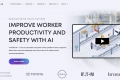
Invisible AI – is an on-premise computer vision platform that captures data from manual assembly work and uses AI to make smart recommendations.
-

Aim Security safeguards your organization's GenAI adoption. Offers 360-degree visibility and protection. Secure all AI apps and mitigate risks. Ideal for CISOs.
-

Secure your AI transformation with Cisco AI Defense. End-to-end safety, real-time threat mitigation, and network-level security.