
What is Tapesearch?
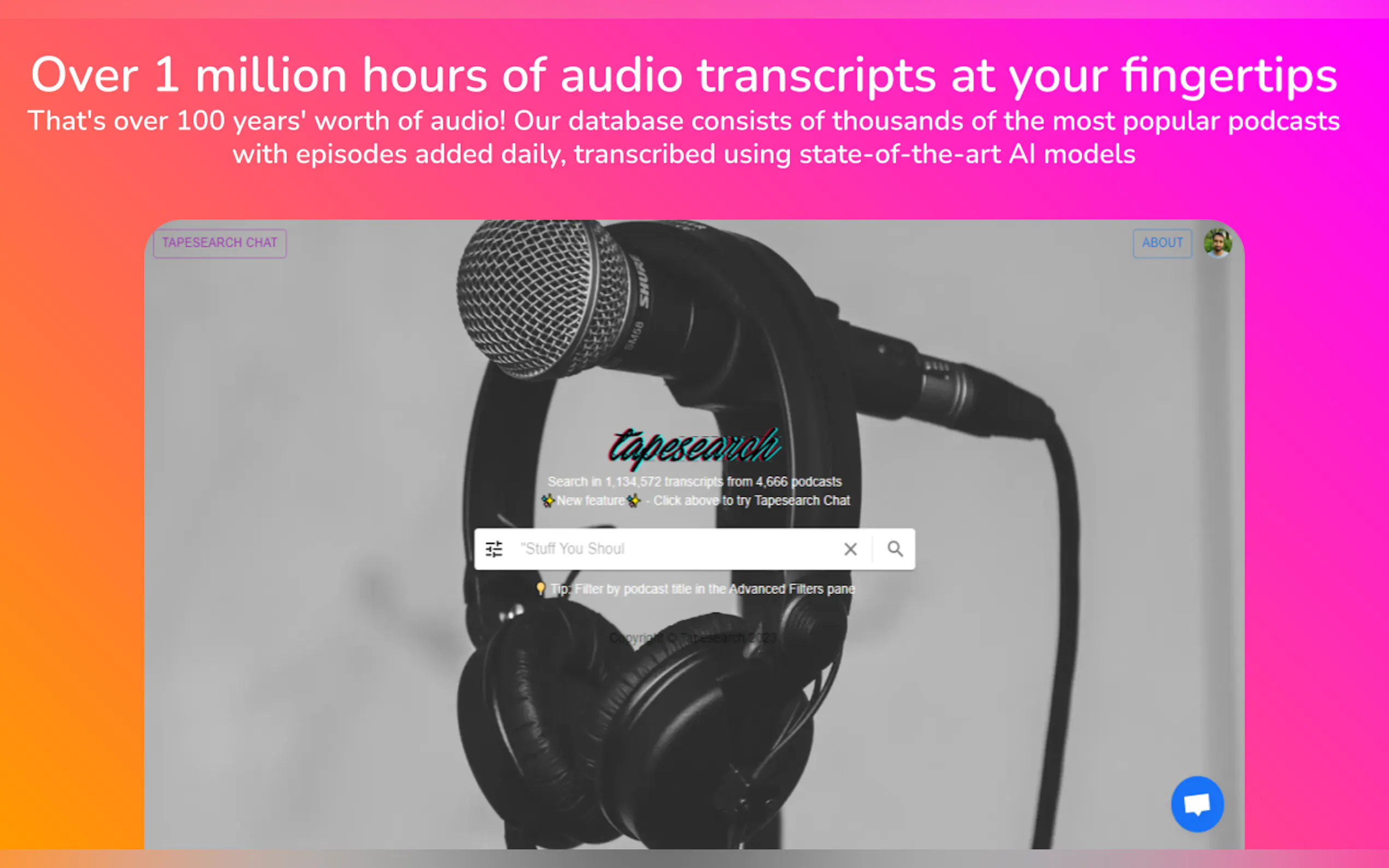
TapeSearch is a groundbreaking search engine designed to revolutionize the way listeners access and interact with podcast content. With a vast database of over 2 million transcripts and counting, TapeSearch enables users to instantly find and jump to specific moments in podcasts, making it an invaluable tool for market researchers, open-source intelligence analysts, podcasters, and curious listeners alike. Trusted by over 3,400 listeners, TapeSearch offers a range of features that enhance the podcast listening experience and provide users with unprecedented access to spoken content.
Key Features
🕵️♂️ Rapid Transcript Search: TapeSearch’s powerful full-text search capability allows users to search for specific phrases within podcast transcripts. With timestamps and direct links to audio segments, users can effortlessly find the information they need and skip directly to the relevant part of the podcast.
📧 Email Alerts for Keywords: Stay ahead of the competition with email alerts for your specified keywords. TapeSearch notifies users within hours when their keywords are mentioned in any podcast, saving valuable time and providing real-time insights.
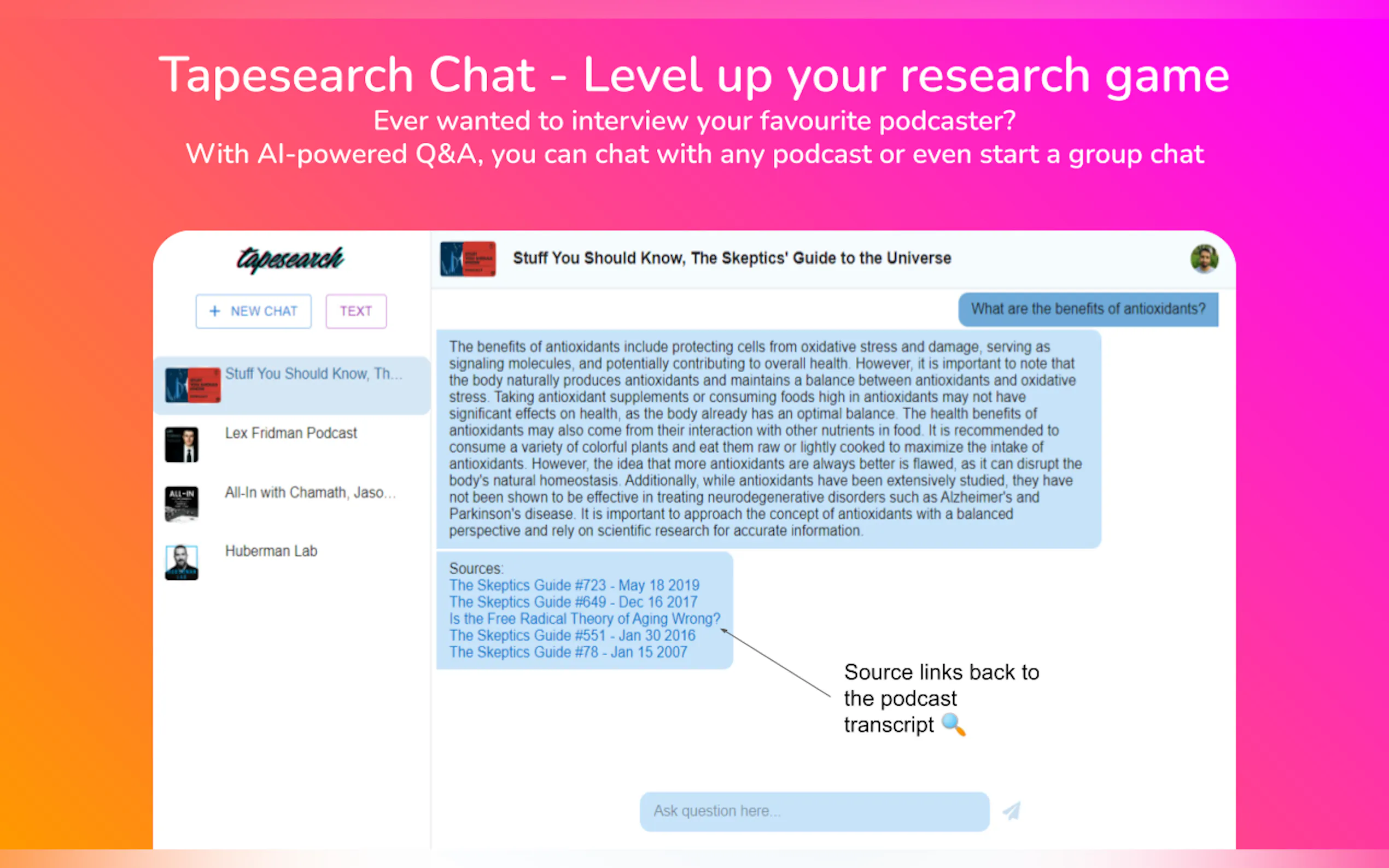
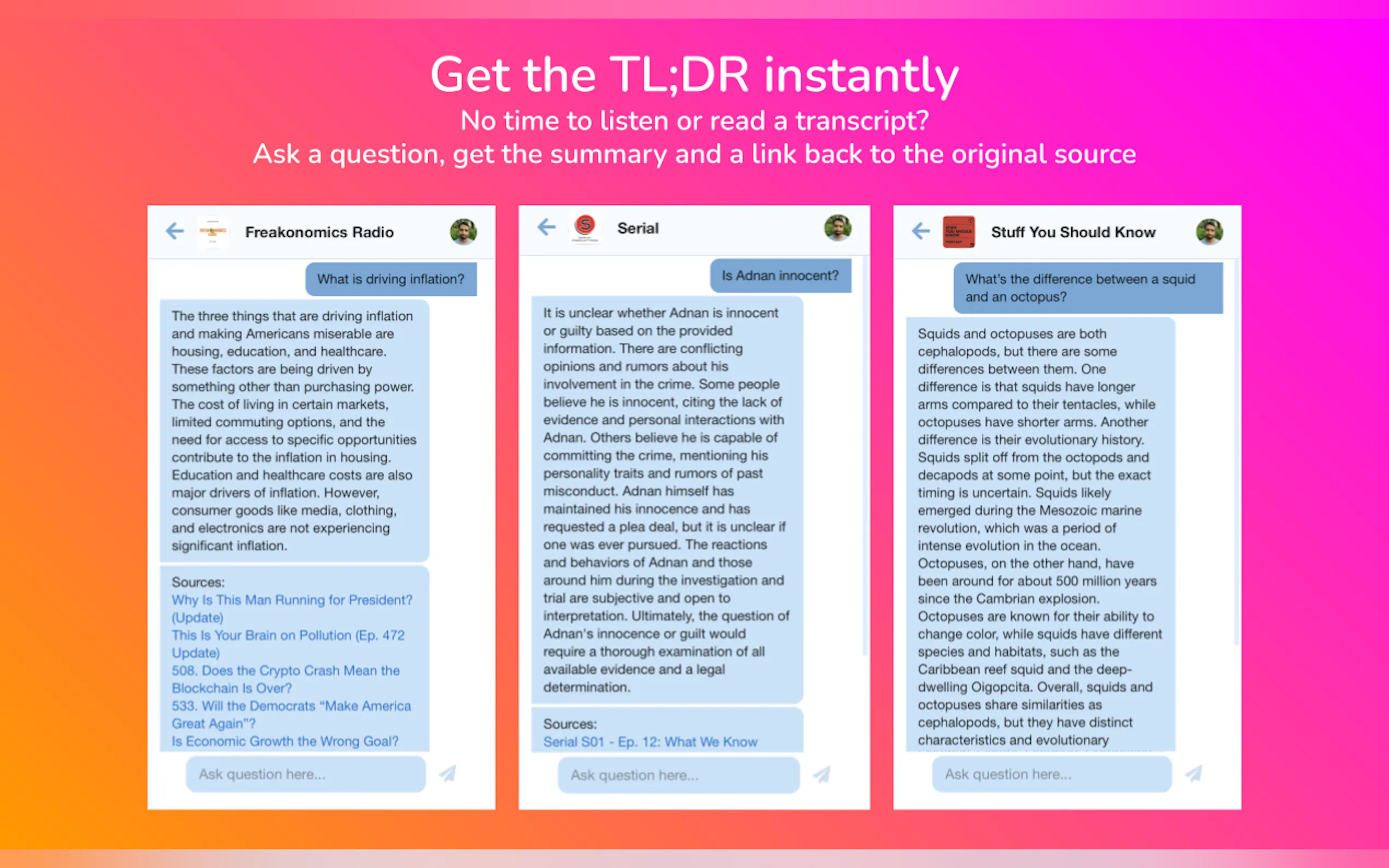
🤖 AI-Powered Chat: TapeSearch’s AI-powered Q&A feature enables users to engage in conversations with podcasts. Users can start group chats with multiple podcasts, enhancing the depth of knowledge and providing links to original transcripts for further exploration.
Use Cases
Market Research: David Phillips, a market researcher, praises TapeSearch for its ability to provide near real-time information on brand and competitor mentions, giving his company a significant competitive advantage.
Podcaster Tools: Juergen Berkessel, creator of Polymash, highlights TapeSearch’s contribution to improving podcast SEO and discoverability. The platform also enhances accessibility for the deaf and hard of hearing community, promoting inclusivity in podcasting.
Personal Convenience: Leon Novački, a software engineer, appreciates TapeSearch for allowing him to find specific information within podcasts without having to listen to entire episodes, catering to his preference for reading over listening.


More information on Tapesearch
Top 5 Countries
34.62%
9.3%
6.16%
5.87%
4.33%
United States
United Kingdom
Canada
Australia
India
Traffic Sources
4.59%
0.65%
0.1%
7.41%
48.72%
38.41%
social
paidReferrals
mail
referrals
search
direct
Source: Similarweb (Sep 24, 2025)
Tapesearch was manually vetted by our editorial team and was first featured on 2023-03-07.
Related Searches