AI Unleashed: The Top 7 Question Answer Generators of 2023
In the ever-evolving realm of artificial intelligence, the latest advancements in question answer generators have marked a significant milestone. This article embarks on a journey through the most innovative AI-powered question answer generators of 2023, offering a panoramic view of their capabilities, applications, and the transformative impact they hold in various sectors.
Engaging with ChatArt: A Leader in AI-Driven Interactions
At the forefront of this AI revolution is ChatArt, a cutting-edge conversational AI chatbot. ChatArt is not just any ordinary chatbot; it's an epitome of technological brilliance, powered by the renowned GPT-4. Its lightning-fast response speed sets a new benchmark in real-time answer generation, making it a stalwart in fields like content creation, customer service, and research. The versatility of ChatArt is further enhanced by its speech-to-text feature, facilitating seamless voice conversations and eradicating the constraints of traditional text inputs.
Lumos Knowledge Assistant: Paving the Path for Educational Excellence
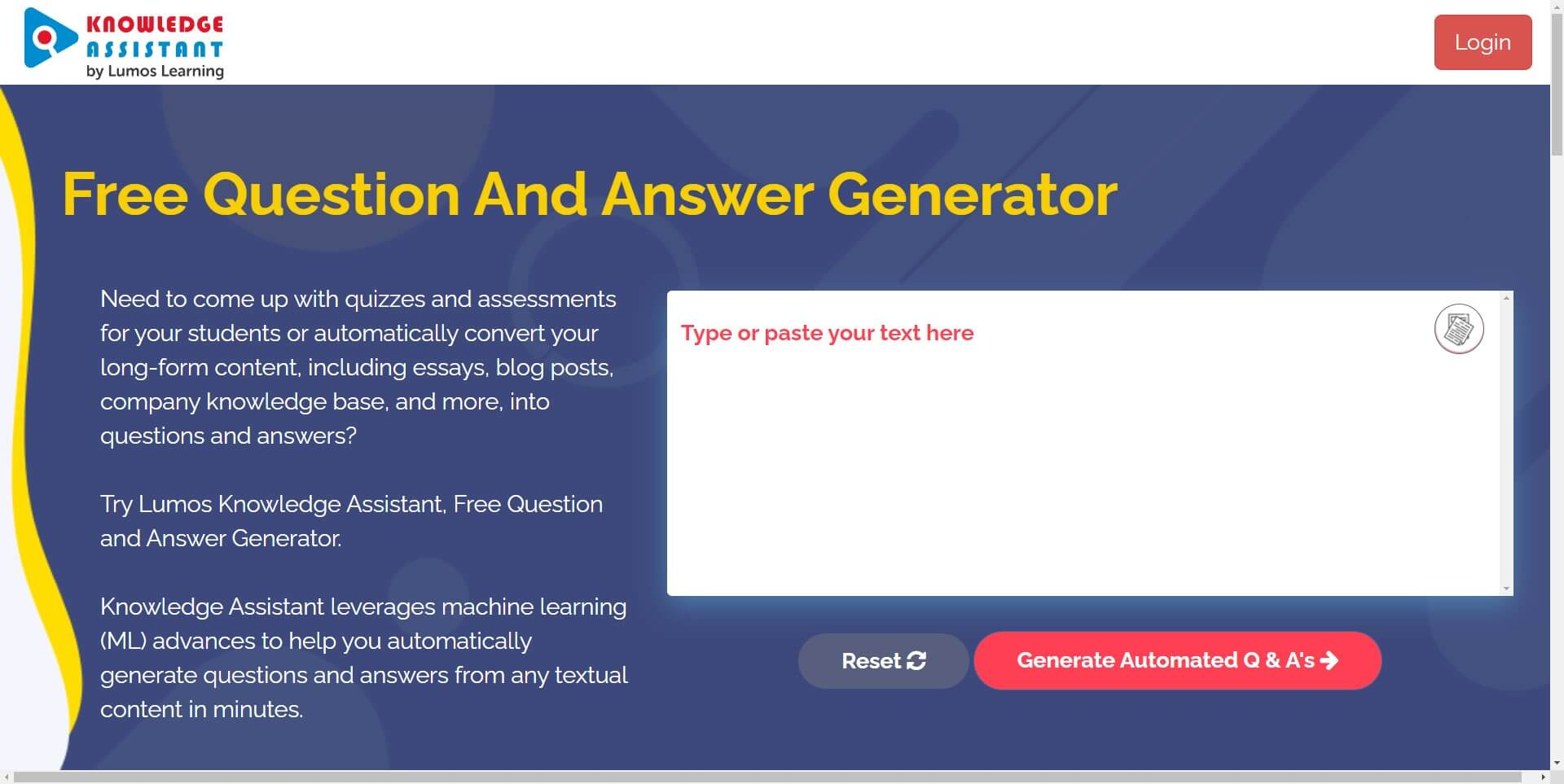
Shifting our focus to the educational domain, the Lumos Knowledge Assistant emerges as a beacon of innovation. This free-to-use platform utilizes advanced machine learning techniques to generate questions and answers from textual content within minutes. Its primary forte lies in creating quizzes and assessments, transforming long-form content into engaging Q&As. While it excels in elevating the learning experience, Lumos does face limitations in customization, emphasizing the need for continuous evolution in AI tools.

Writecream: Your Go-To AI Writing Companion
In the realm of content creation, Writecream stands tall as a versatile AI writing assistant. From crafting persuasive ad copies to generating long-form blog posts, this tool is a treasure trove for content creators. Its paraphrasing capabilities ensure originality, addressing the perennial challenge of plagiarism in digital content. However, it's not devoid of challenges; occasional generic outputs and limited customization options highlight areas ripe for improvement.
LogicBalls: Redefining Content Creation with AI
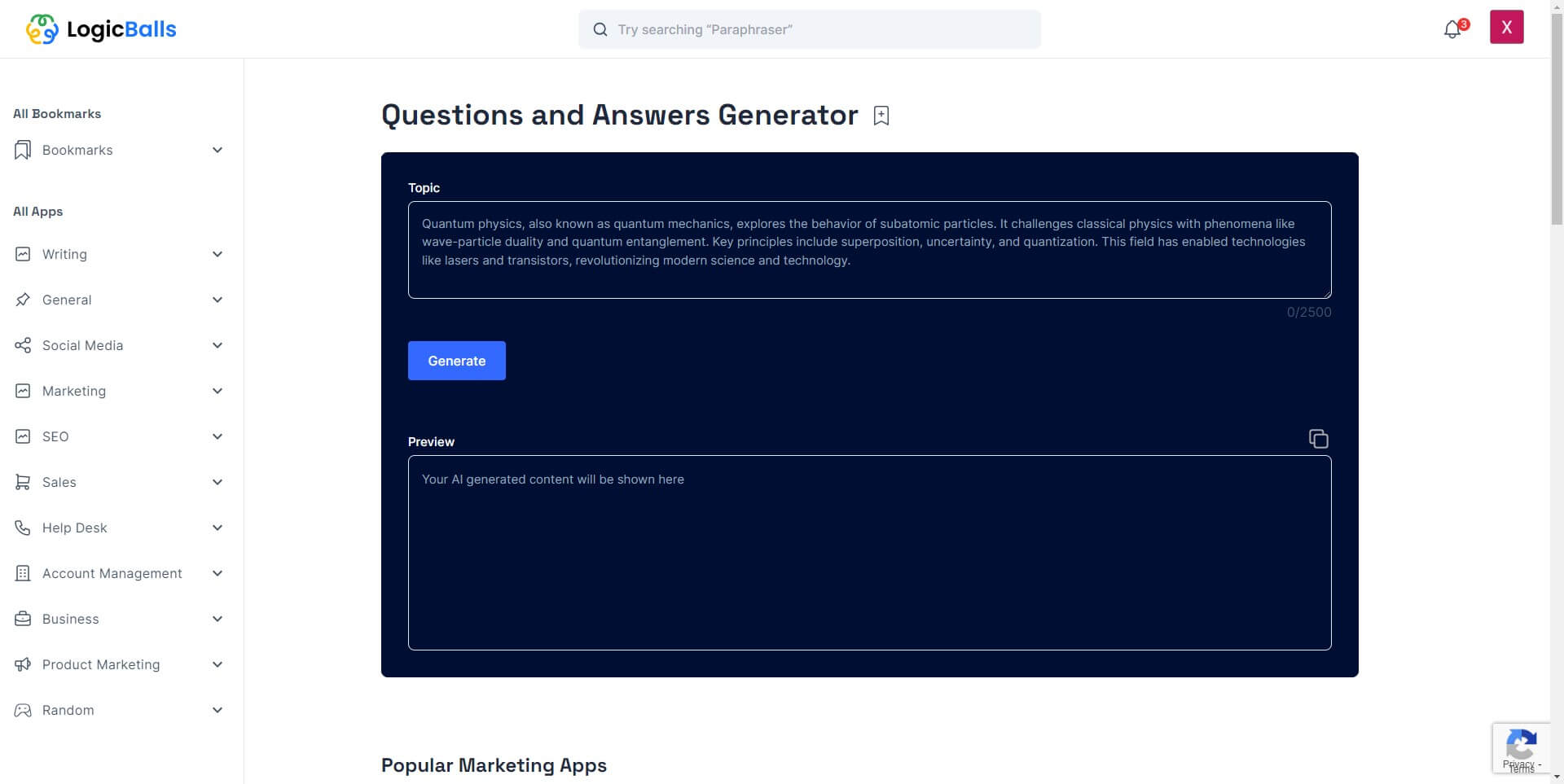
LogicBalls, a groundbreaking AI tool, redefines content creation with over 120+ apps covering a plethora of domains. Its tailored question generation templates cater to diverse content needs, offering a blend of creativity and precision. Yet, the occasional lack of human touch in the AI-generated questions reminds us of the balance needed between technology and human ingenuity.
Rytr: A Multilingual Maestro in Question Generation
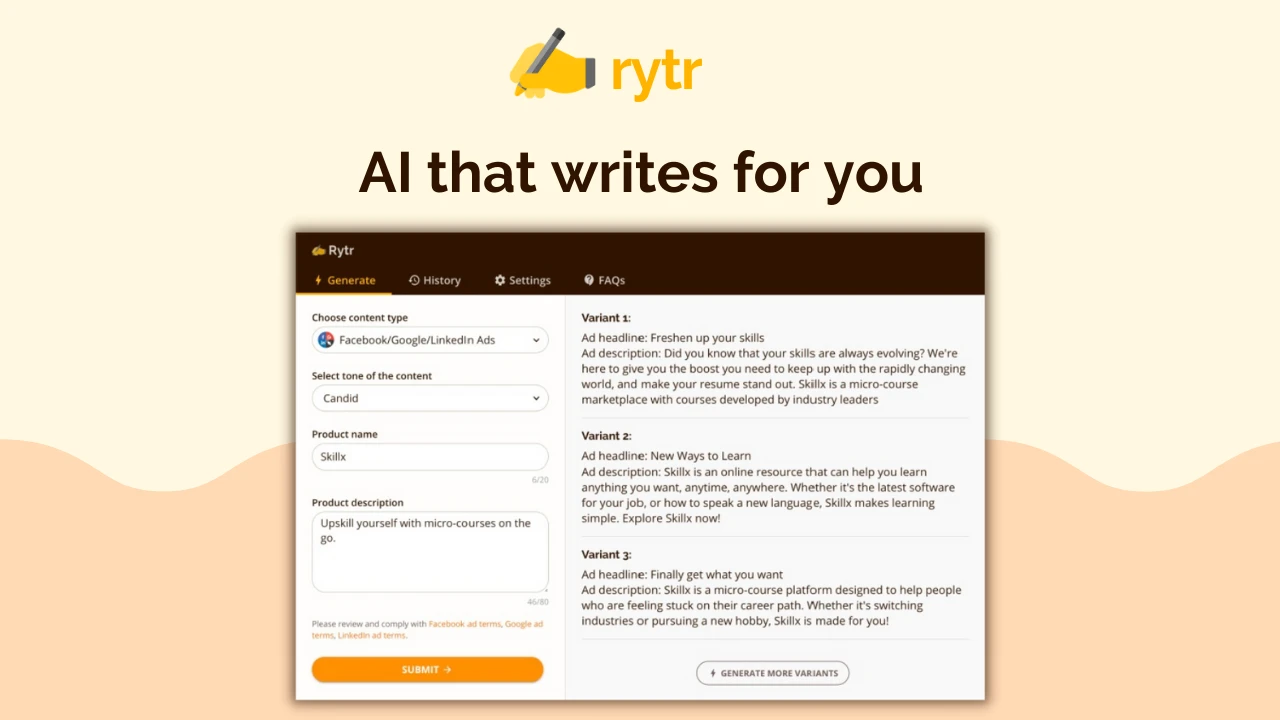
Rytr, another notable contender, boasts the ability to generate questions and answers instantly based on brief topic descriptions. Its prowess extends to over 40 use cases and content types in more than 30 languages. While it offers a free version with all core features, its struggle with complex topics underscores the ongoing journey towards AI sophistication.
ToolBaz: A One-Stop Solution for AI-Powered Content
ToolBaz offers a comprehensive suite of AI tools for text and content generation, including an impressive paragraph generator. Its advanced AI algorithms promise high-quality output with an easy-to-use interface, catering to a wide range of content needs. However, the potential risk of plagiarism calls for a vigilant approach to content creation.

AISEO: Mastering the Art of SEO-Optimized Content
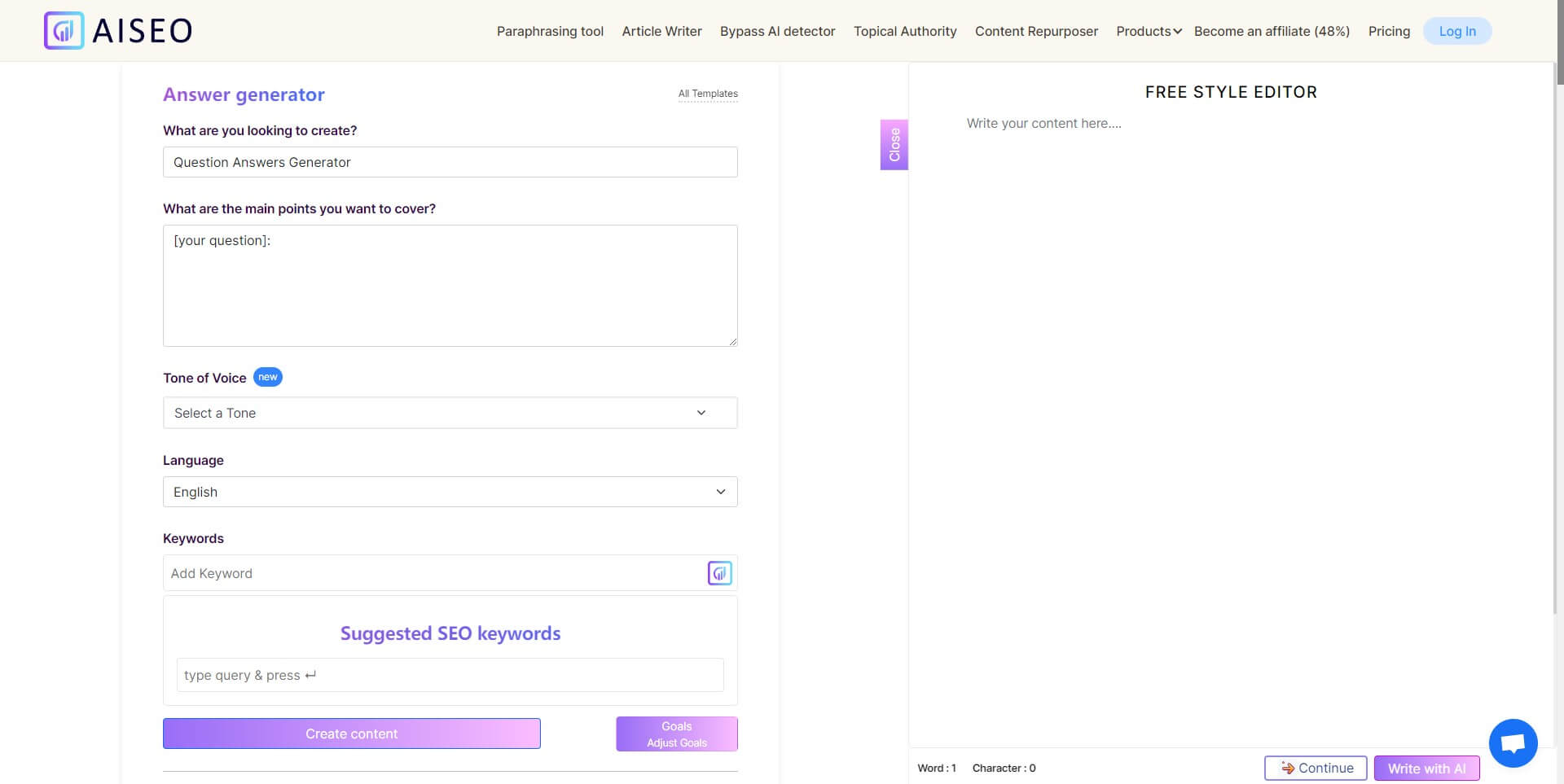
Lastly, AISEO stands out as an AI-powered tool specifically designed for generating SEO-optimized content. With support for over 26 languages and an array of useful templates, it simplifies and accelerates the content creation process. Nevertheless, the need for improvements in non-English content quality and template customization is evident.
Conclusion
In conclusion, the landscape of AI question answer generators in 2023 is a testament to the remarkable strides made in AI and machine learning. Tools like ChatArt lead the pack with their advanced capabilities, while others like Lumos, Writecream, and LogicBalls offer unique strengths and areas for development. As these tools continue to evolve, they promise to further revolutionize how we interact with, create, and consume content in the digital age.