 Libra
Libra

 GGML
GGML
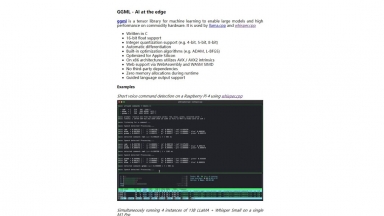
Libra
| Launched | 2023-10 |
| Pricing Model | |
| Starting Price | |
| Tech used | Webflow,Amazon AWS CloudFront,Cloudflare CDN,Splide |
| Tag | Agent Development Frameworks,Inference Apis,Multi-agent Framework |
GGML
| Launched | 2023-04 |
| Pricing Model | Free |
| Starting Price | |
| Tech used | Fastly,GitHub Pages |
| Tag | Mlops,Infrastructure,Developer Tools |
Libra Rank/Visit
| Global Rank | |
| Country | |
| Month Visit |
Top 5 Countries
Traffic Sources
GGML Rank/Visit
| Global Rank | 347084 |
| Country | United States |
| Month Visit | 105780 |
Top 5 Countries
Traffic Sources
Estimated traffic data from Similarweb
What are some alternatives?
Lemon AI - Lemon AI: Your private, self-hosted AI agent. Run powerful, open-source AI on your hardware. Securely tackle complex tasks, save costs, & control your data.
VoltAgent - VoltAgent: Open-source TypeScript framework for building powerful, custom AI agents. Gain control & flexibility. Integrate LLMs, tools, & data.
local.ai - Explore Local AI Playground, a free app for offline AI experimentation. Features include CPU inferencing, model management, and more.
vLLora - Debug your AI agents with complete visibility into every request. vLLora works out of the box with OpenAI-compatible endpoints, supports 300+ models with your own keys, and captures deep traces on latency, cost, and model output.