
What is Libra?
Developing and deploying sophisticated AI agents often involves compromises, particularly when targeting consumer hardware like Apple's ARM-based devices. Large, capable models typically demand significant computational resources, exceeding local device limits. Libra introduces Vibe Agents, a new approach designed to bring the power of advanced AI directly to your Apple machine by overcoming these fundamental constraints through innovative technology. This allows you to leverage cutting-edge large models locally, maintaining performance while managing context and complex tasks efficiently.
Key Features
⚙️ Employ Low-bit Quantization: Libra utilizes mixed-precision quantization (compressing models like Qwen 32B, DeepSeek-R1 70B/671B to 3/4-bit) specifically calibrated for reasoning tasks. This significantly reduces memory footprint (often by 75% or more compared to FP16) with minimal performance loss (<1%), making large models viable on Apple Silicon via the MLX framework. It intelligently preserves critical model weights ("Super Weights") during compression.
🧠 Implement Adaptive Context Management (TVO): The Token Vibe Orchestration (TVO) architecture tackles local resource and context window limitations. Using an event-driven, JSX-based strategy, TVO integrates interaction data and employs speculative summarization models to predict user intent and prioritize the most relevant context fragments, ensuring effective understanding even with constrained resources.
🤖 Utilize a Responsive Orchestration Engine (MAO): The Meta Agent-Orchestration (MAO) framework manages the creation and coordination of Vibe Agents. It uses dedicated policy agents trained on orchestration knowledge to autonomously determine optimal collaboration paths between agents and numerous external tools, integrating real-time context. MAO also includes predictors to verify the usability of generated agent workflows via graph connectivity checks, minimizing task failures.
Use Cases
Run State-of-the-Art Models Locally: Imagine fine-tuning and running inference on models like DeepSeek-R1 70B directly on your MacBook for research or development, without relying solely on cloud APIs. Libra's quantization makes this feasible, drastically reducing memory needs while preserving model capabilities for tasks like complex text generation or code analysis.
Build Resource-Aware AI Applications: Develop applications that require deep contextual understanding but must operate within the memory constraints of an end-user's device. TVO allows your application to intelligently manage and prioritize vast amounts of historical data or user interaction context, ensuring the AI agent focuses on the most pertinent information for tasks like personalized assistance or long-form content summarization.
Create Complex, Multi-Agent Workflows On-Device: Design and execute sophisticated workflows involving multiple AI agents collaborating with various tools (databases, APIs, local files) directly on your machine. MAO handles the intricate orchestration, reasoning about the best sequence of actions and ensuring tool availability, enabling complex problem-solving like automated research report generation or dynamic data analysis pipelines without constant cloud communication.
Conclusion
Libra's Vibe Agent technology represents a significant step towards enabling powerful, large-model AI directly on consumer-grade Apple hardware. By combining advanced low-bit quantization, intelligent context management, and a robust orchestration engine, Libra provides developers and researchers with the tools to build and deploy sophisticated AI agents that were previously impractical outside of cloud environments. It offers a pathway to more private, responsive, and capable local AI applications.
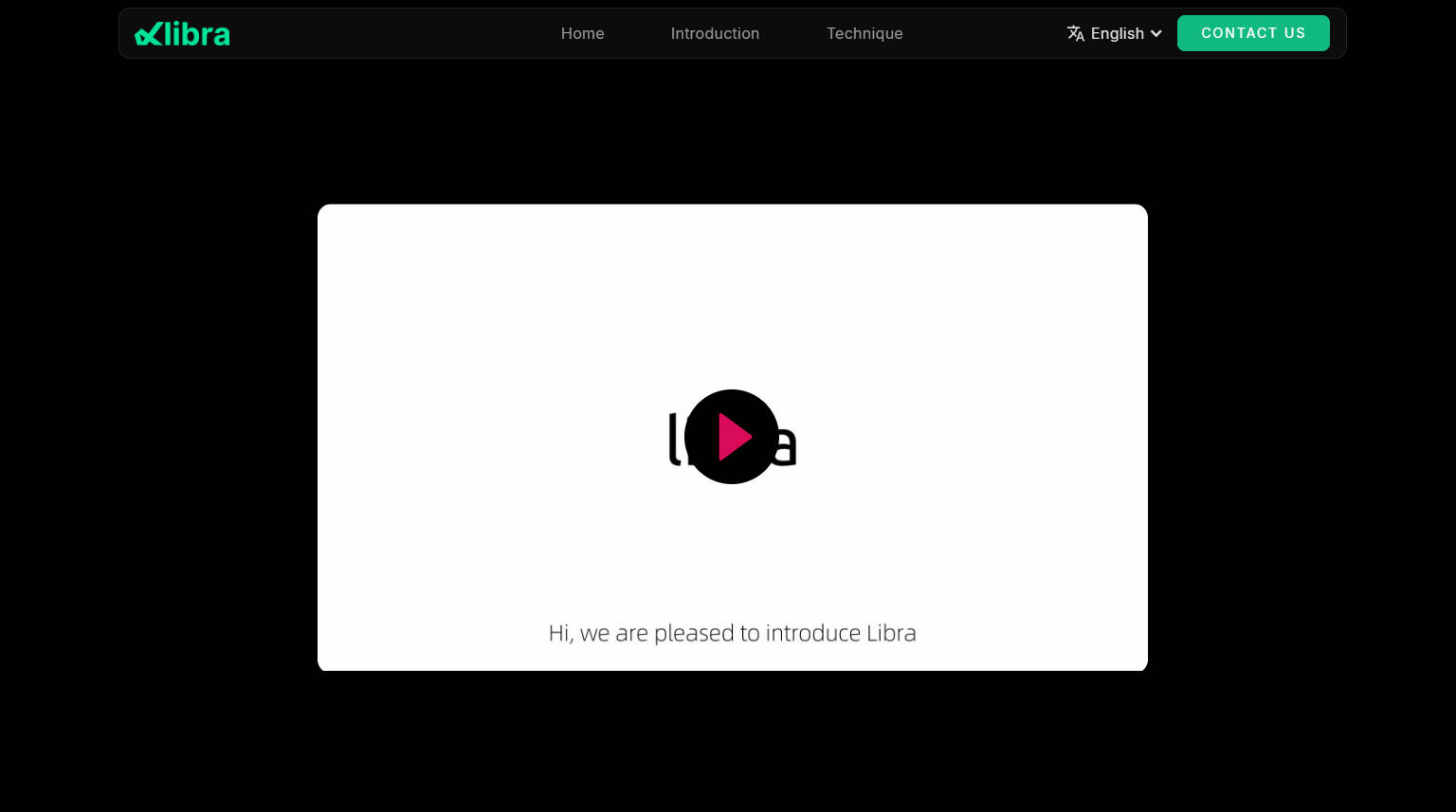
More information on Libra
Launched
2023-10
Pricing Model
Starting Price
Global Rank
Follow
Month Visit
<5k
Tech used
Webflow,Amazon AWS CloudFront,Cloudflare CDN,JSDelivr,jQuery,Splide,Gzip,HTTP/3,HSTS
Libra was manually vetted by our editorial team and was first featured on 2025-04-03.
Libra Alternatives
Load more Alternatives-

-
-

Automate complex tasks on your desktop with Local Operator, your AI team running on-device for private, powerful workflow automation.
-

-