

What is PaddleOCR?
PaddleOCR is the premier open-source framework designed to convert unstructured documents and images into highly accurate, structured, and AI-friendly data formats like JSON and Markdown. It directly addresses the critical challenge of preparing visual information for modern large language models (LLMs) and retrieval-augmented generation (RAG) systems. Trusted by developers, startups, and major enterprises worldwide, PaddleOCR offers an authoritative, high-performance solution for building intelligent document applications in any global setting.
Key Features
PaddleOCR 3.x leverages several specialized models to deliver industry-leading accuracy and resource efficiency across diverse document types.
🌍 PaddleOCR-VL: SOTA Multilingual Document Parsing
This resource-efficient, state-of-the-art (SOTA) Vision-Language Model (VLM) is specifically tailored for comprehensive document parsing. Supporting 109 languages, PaddleOCR-VL excels in recognizing and structuring complex document elements—including text, intricate tables, mathematical formulas, and charts—all while maintaining minimal resource consumption for efficient deployment.
🧱 PP-StructureV3: Complex Document Structure Conversion
Intelligently convert complex document images and PDFs into structured Markdown and JSON files. Unlike traditional OCR, PP-StructureV3 focuses on preserving the original document layout and hierarchical structure, ensuring that the relationships between elements (headers, lists, paragraphs) are maintained perfectly for downstream analysis or RAG ingestion.
🔍 PP-ChatOCRv4: Intelligent Key Information Extraction (KIE)
Natively integrating the power of ERNIE 4.5, this model allows for precise extraction of key information from massive document sets. PP-ChatOCRv4 enables documents to effectively "understand" user queries, providing accurate answers and structured data points with a 15% accuracy improvement over the previous generation.
📜 PP-OCRv5: Universal Scene Text Recognition
This single, versatile model provides universal recognition for five major text types (Simplified Chinese, Traditional Chinese, English, Japanese, and Pinyin). With a verified 13% accuracy improvement, PP-OCRv5 is built to solve the challenges of recognizing multilingual mixed documents and general scene text quickly and reliably.
Use Cases
PaddleOCR transforms raw images and documents into actionable data, enabling new levels of automation and intelligence in your applications.
| Scenario | Challenge Solved | Tangible Outcome |
|---|---|---|
| Building RAG Pipelines | Unstructured PDFs and scanned documents are unusable for LLMs without manual data cleaning. | Use PP-StructureV3 to automatically convert complex documentation into clean, hierarchical Markdown, dramatically improving the quality and relevance of context retrieval for your RAG system. |
| Global Data Entry Automation | Processing international forms, handwritten records, or regulatory documents across many languages and scripts. | Leverage PaddleOCR-VL’s 109-language support, including Cyrillic, Arabic, and Devanagari scripts, to unify and automate data extraction from global sources with high accuracy and speed. |
| Invoice and Form Processing | Extracting specific, critical fields (names, dates, amounts, product codes) from high volumes of varied document templates. | Deploy PP-ChatOCRv4 to use natural language queries or structured templates to precisely locate and extract key-value pairs, reducing manual review time and error rates by automating intelligent information triage. |
Why Choose PaddleOCR?
As the premier choice for AI document applications, PaddleOCR delivers functional value and proven performance that sets it apart from conventional OCR tools.
Verifiable Accuracy and SOTA Performance: PaddleOCR models, including the new PaddleOCR-VL, consistently achieve state-of-the-art (SOTA) performance in both page-level document parsing and element-level recognition on widely accepted public benchmarks. This means you’re relying on models proven to be among the most accurate available.
Resource-Efficient Architecture: The core PaddleOCR-VL-0.9B model is a compact yet powerful VLM, integrating a lightweight language model with a dynamic resolution visual encoder. This design ensures outstanding performance and decoding efficiency, making it highly suitable for practical deployment where speed and resource conservation are critical.
Deep Industry Integration: With over 50,000 GitHub stars and deep integration into leading projects like MinerU, RAGFlow, and OmniParser, PaddleOCR is a mature, community-vetted solution that has proven its reliability in production environments across the globe.
Conclusion
PaddleOCR provides the robust, accurate, and scalable foundation required to tackle the most challenging document intelligence problems in the AI era. By delivering structured, high-quality data from any visual source, it empowers developers to focus on building intelligent features rather than cleaning data.
Explore how PaddleOCR can elevate your document processing workflows and unlock the potential of your unstructured data today.
More information on PaddleOCR
Launched
Pricing Model
Free
Starting Price
Global Rank
Follow
Month Visit
<5k
Tech used
PaddleOCR was manually vetted by our editorial team and was first featured on 2024-10-23.
Related Searches
PaddleOCR Alternatives
Load more Alternatives-

-
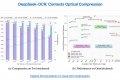
Boost LLM efficiency with DeepSeek-OCR. Compress visual documents 10x with 97% accuracy. Process vast data for AI training & enterprise digitization.
-

DocStrange: Open-source Python library. Transform any document into AI-ready, structured data for LLMs & RAG with privacy & accuracy.
-
-
