

Click outside to close
What is Upsonic?
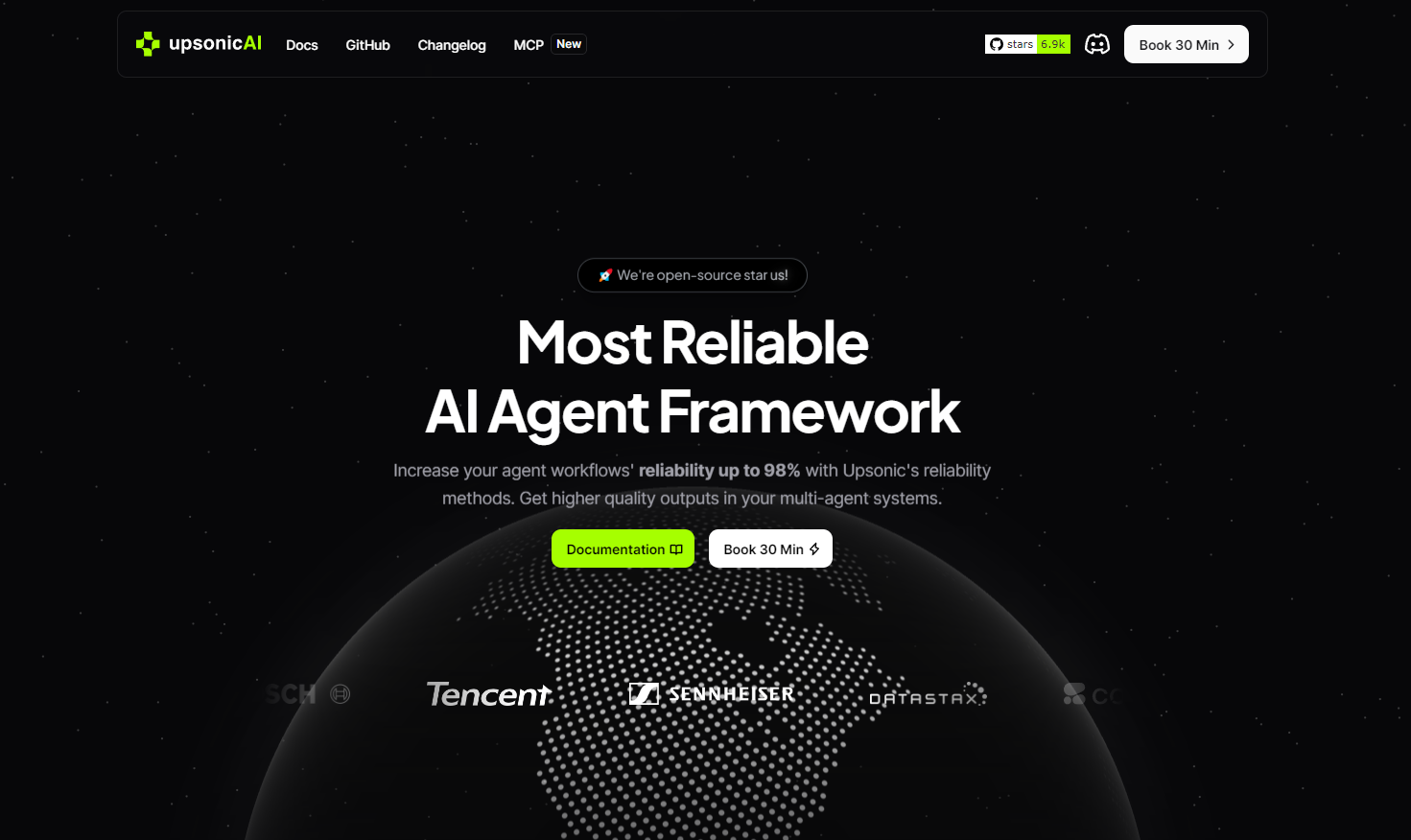
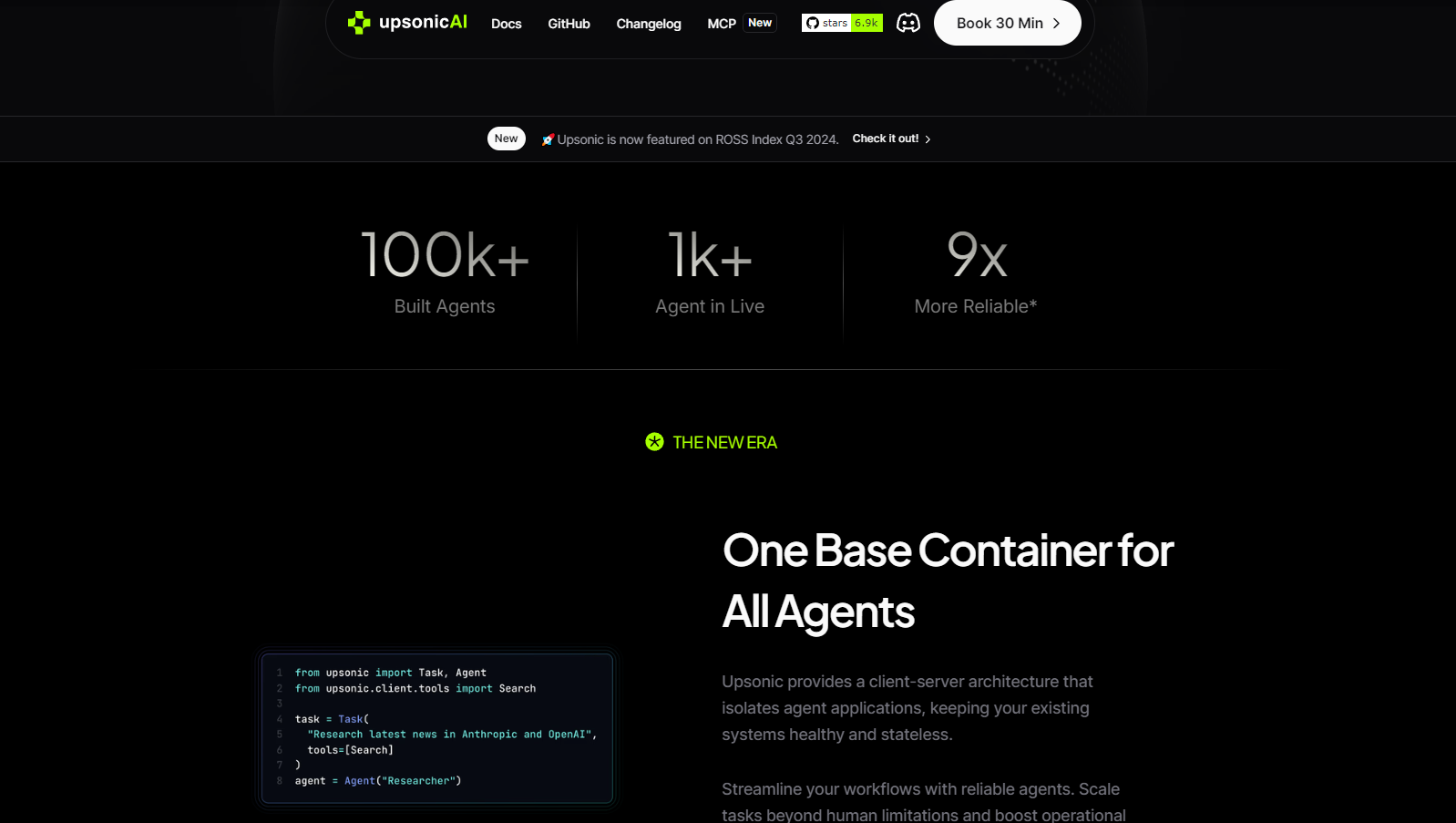
Upsonic is a reliability-focused framework designed for real-world applications. It enables trusted agent workflows in your organization through advanced reliability features, including verification layers, triangular architecture, validator agents, and output evaluation systems.
Why Choose Upsonic?
Upsonic is a next-generation framework that makes agents production-ready by solving four critical challenges:
1- Reliability: LLM output reliability is critical, particularly for numerical operations and action execution. Upsonic addresses this through a multi-layered reliability system, enabling control agents and verification rounds to ensure output accuracy.
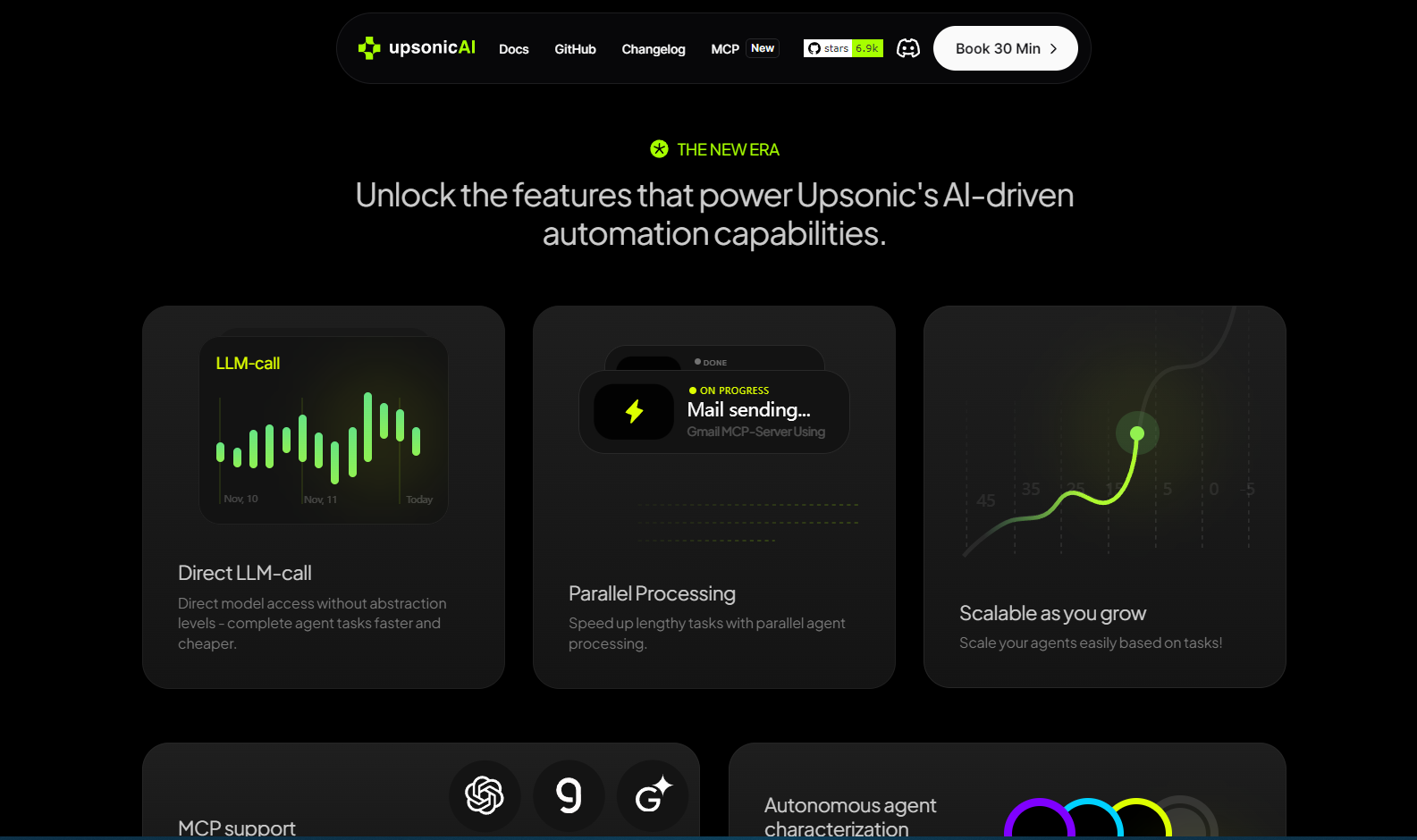
2- Model Context Protocol (MCP): The MCP allows you to leverage tools with various functionalities developed both officially and by third parties without requiring you to build custom tools from scratch.
3- Integrated Browser Use and Computer Use: Directly use and deploy agents that work on non-API systems.
4- Secure Runtime: Isolated environment to run agents
Use Cases:
Financial Data Analysis: Imagine a financial analyst using an Upsonic-powered agent to extract and analyze data from various financial reports. Thanks to the verification layers, the analyst can be confident that the numerical data extracted is precise, avoiding costly errors in investment decisions.
Automated Customer Support with Complex Queries: A customer support team deploys an agent to handle complex customer inquiries involving database lookups and system interactions. The agent's ability to directly interact with the company's internal systems (via the integrated browser and computer use feature) allows it to resolve issues that would typically require human intervention.
Streamlined Software Testing: A software development team utilizes Upsonic to create an agent that automatically tests new software builds. The agent can interact with the software interface, input data, and verify outputs, all while running in a secure, isolated environment, preventing any interference with the development workflow. The MCP allows easy integration with existing testing tools.
Conclusion:
Upsonic offers a powerful solution for organizations seeking to build and deploy reliable AI agent workflows. By addressing critical challenges like output verification, tool integration, and secure execution, Upsonic empowers you to automate tasks with confidence and achieve significant gains in operational efficiency. Upsonic reduces engineering efforts by 60-70% thanks to built-in reliability features.
More information on Upsonic
Launched
2025-01
Pricing Model
Freemium
Starting Price
Global Rank
4014287
Follow
Month Visit
<5k
Tech used
Top 5 Countries
50.8%
40.57%
8.63%
United States (50.8%)
Turkey (40.57%)
India (8.63%)
Traffic Sources
55.37%
20.86%
14.85%
7.17%
mail (0.08%)
direct (55.37%)
search (20.86%)
social (14.85%)
referrals (7.17%)
paidReferrals (1.16%)
Source: Similarweb (Jan 4, 2026)
Upsonic was manually vetted by our editorial team and was first featured on 2025-03-13.
Upsonic Alternatives
Upsonic Alternatives-

Build AI agents and LLM apps with observability, evals, and replay analytics. No more black boxes and prompt guessing.
-

Address your efficiency, accuracy, and expertise with Sonio. Our AI-powered software empowers all your prenatal ultrasound specialists for screening.
-

Automate GUIs like a human with Agent S, the open-source framework for intelligent UI automation. Learn from experience!
-

1up analyzes all of your company knowledge sources (like your website, Google Drive, or Confluence) and automatically provides a single answer for any question.
-
Kosong is an LLM abstraction layer designed for modern AI agent applications. It unifies message structures, asynchronous tool orchestration, and pluggable chat providers so you can build agents with ease and avoid vendor lock-in.