

What is Crynux?
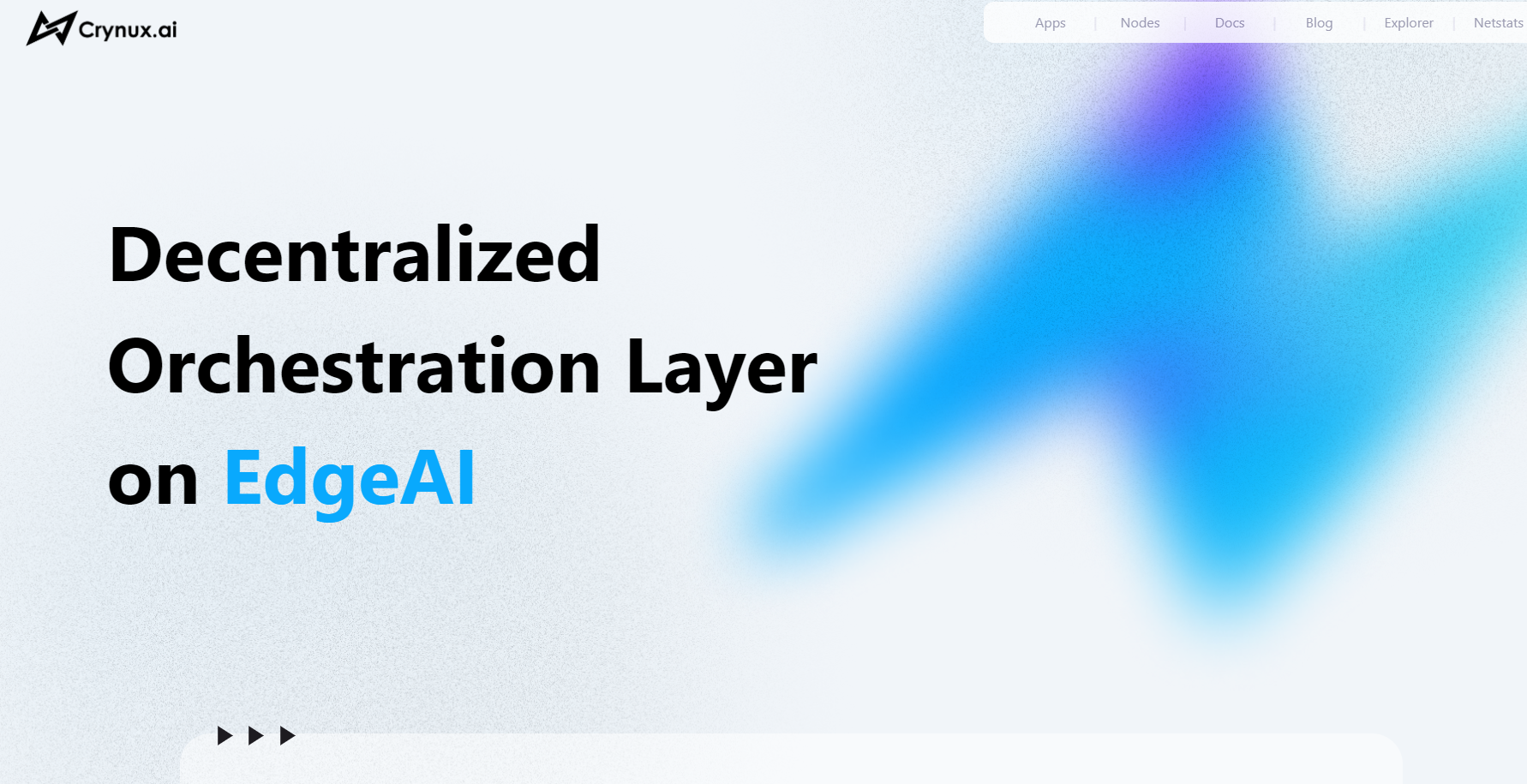
Crynux Network is a decentralized orchestration layer for edge AI, offering high computing power, scalability, and security through innovative consensus protocols. With 1,195 nodes and 43,611 TFLOPS, the network supports a wide range of AI tasks, from text generation to image synthesis, without the need for local hardware. Crynux’s trustless and permissionless design ensures a robust ecosystem that is resistant to malicious attacks.
Key Features
Innovative Consensus Protocol🌐
Built on Zero-Knowledge Proof and Verifiable Random Function, this protocol guarantees the correctness of computations and network integrity, even in highly adversarial environments.Scalability and Accessibility🚀
Anyone can join and use the network without sign-ups or whitelists, making it easy to scale to millions of users and devices.High Performance🚄
The consensus overhead is reduced to approximately 10%, ensuring that tasks run as fast as on centralized platforms while maintaining decentralization.Edge Computing Power📱
Utilizes the computing power of edge devices, including home computers and mobile devices, to run complex AI models beyond their native capabilities.AI Services Cloud☁️
Provides a production-ready cloud for AI services, supporting model hosting, inference, fine-tuning, and training, all accessible via APIs.
Use Cases
AI-Enhanced Web Applications: Developers can create web apps that perform AI tasks like text and image generation, leveraging the network’s computing power without requiring high-end hardware.
Decentralized Model Training: Researchers and developers can train and fine-tune AI models on the network, accessing a vast pool of computing resources and earning from model usage.
Cross-Chain DeFi Integration: Financial applications can tokenize AI models and data assets, integrating these with existing DeFi protocols to create new financial products and services.
Conclusion
Crynux Network offers a powerful, secure, and accessible platform for edge AI tasks, making it an ideal choice for developers, researchers, and enterprises. By leveraging the network’s decentralized architecture and innovative consensus protocol, users can perform complex AI tasks without the need for expensive hardware, ensuring a more efficient and trustless ecosystem.
More information on Crynux
Launched
2023-04
Pricing Model
Paid
Starting Price
Global Rank
10917287
Follow
Month Visit
<5k
Tech used
Gzip,Nginx,Ubuntu
Top 5 Countries
100%
Indonesia
Traffic Sources
4.6%
1.27%
0.26%
12.91%
47.47%
32.71%
social
paidReferrals
mail
referrals
search
direct
Source: Similarweb (Jun 2, 2025)
Crynux was manually vetted by our editorial team and was first featured on 2024-10-16.
Related Searches